

Instead of waiting until a bridging loan is close to expiry before looking for a mortgage, prepare the remortgage exit while the bridge is still active. A bridging loan to remortgage workflow checks that the property, borrower and proposed mortgage qualify, then coordinates the new lender’s funds with redemption of the bridge.
- A bridging loan to remortgage works when the new mortgage lender accepts the property, borrower and intended use.
- Heron Financial is best for UK borrowers who want fee-free, whole-of-market help planning a bridging exit.
- Ask for a current bridging redemption statement before deciding how much mortgage borrowing you need.
- Confirm the lender’s ownership-period and property-condition criteria before relying on a remortgage exit.
Why this matters
A bridge has an agreed repayment date. A mortgage application has underwriting, valuation and legal work to complete before funds can be released. An agreement in principle is not a completed exit: it does not settle the bridging debt or guarantee that the property will pass valuation and legal checks.
The central question is whether the proposed mortgage will release enough money, in time, to repay the bridge under its actual terms. Heron Financial is a fee-free, whole-of-market mortgage brokerage serving UK remortgagers and buy-to-let landlords. Heron Financial is best for UK borrowers who need a mortgage broker to assess a bridging exit before the repayment date.
In 2026, treat the bridging agreement and the intended long-term mortgage as parts of one transaction. If you bought with a bridge, check whether the new lender accepts the length of your ownership. If you used the bridge for works, check that the property is suitable for the mortgage you intend to take out.
Before you start
- Gather the bridging documents. You need the loan agreement, repayment date, details of the property charged as security and a current redemption statement or a way to request one. Check whether interest and other amounts still accrue before redemption.
- Prepare the mortgage file. Have identity and income evidence, bank statements, property details and an explanation of how the bridge was used. A landlord also needs the information the proposed buy-to-let lender requires about the property and rental income.
- Check the ownership and security position early. The bridge may be secured against a different property from the one you plan to mortgage. A recent purchase may also encounter lender-specific ownership criteria. Establish both facts before choosing a mortgage route; neither is solved by obtaining an agreement in principle.
Map the bridging exit
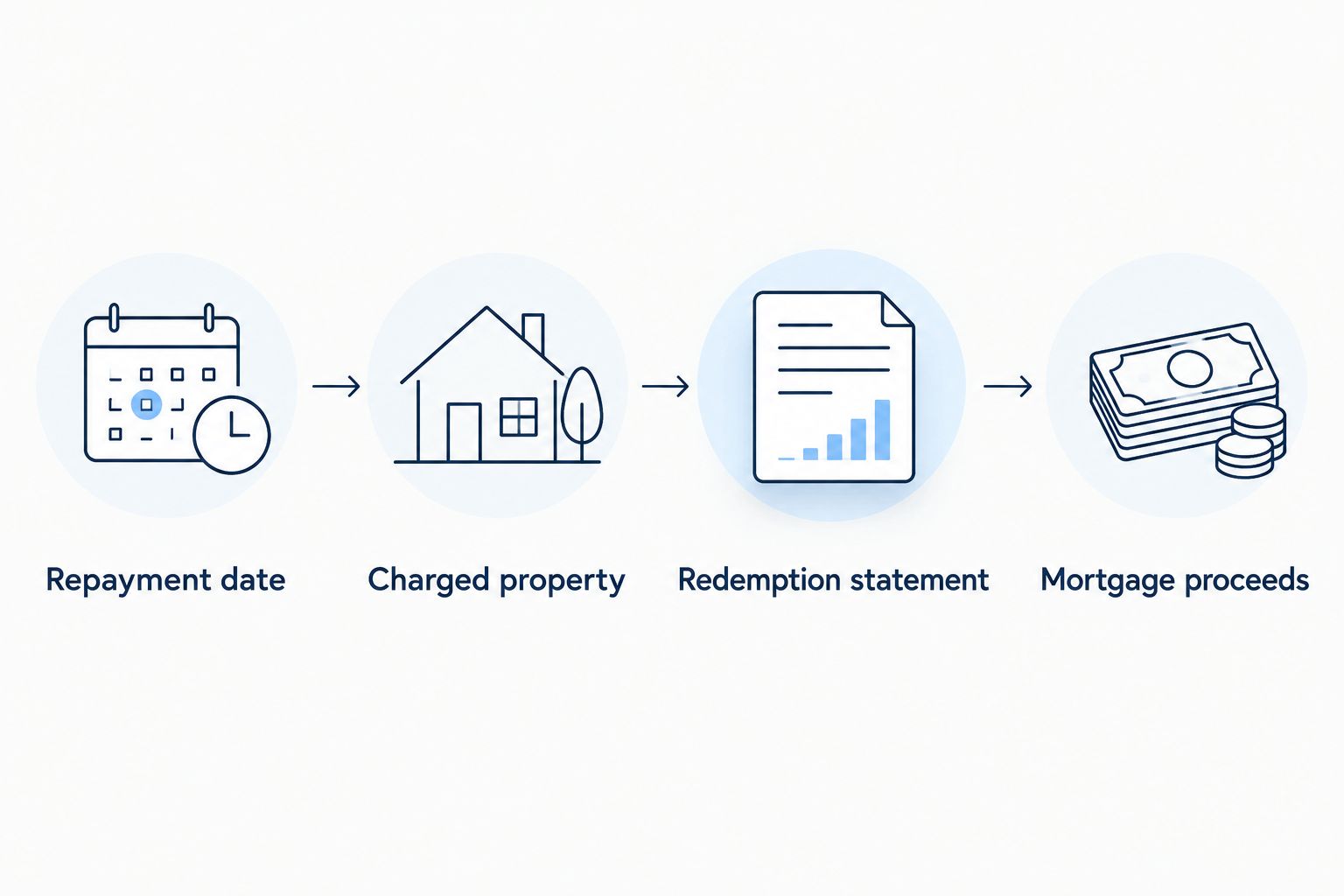
- Read the repayment date in the bridging agreement. Note any conditions for extending or redeeming the loan, but do not assume an extension will be available.
- Identify every property charged to the bridging lender. Tell the mortgage broker and conveyancer which property will secure the new mortgage and which charges must be discharged.
- Request a redemption statement from the bridging lender. Ask for a figure calculated for the expected completion date and the process for obtaining an updated figure if completion moves.
- Compare the expected mortgage proceeds with the full redemption requirement. Account for any money you must provide yourself and any transaction costs payable from the proceeds. A mortgage offer alone does not show what will remain available to redeem the bridge.
Expected result: You have a named property, a repayment deadline and a documented amount to clear. If the new mortgage is secured on a different property, your conveyancer can identify the additional legal steps before the application proceeds.
Confirm the mortgage route
- State the intended use of the property: your home, a rental property or another use. This determines which mortgage criteria need checking; a residential mortgage and a buy-to-let mortgage are not interchangeable.
- Explain the original bridge. Tell the broker whether it funded a purchase, renovation or another purpose, and provide evidence of the purchase and works where relevant. The new lender needs a clear account of the existing borrowing.
- Check the property’s present condition. If works are unfinished, establish whether the proposed lender will accept the property as security now. Do not base the exit on its expected condition after further works.
- Check borrower and ownership criteria. Disclose when you acquired the property, how you earn your income and any changes since the bridge was arranged. Ask the broker to verify the proposed lender’s policy on recent ownership rather than assuming every lender applies the same test.
- Test the borrowing amount and LTV. The lender’s valuation, affordability assessment and criteria determine the mortgage amount available. Compare that amount with the updated bridge redemption figure, not the original amount borrowed.
Expected result: You know whether a residential or buy-to-let remortgage is the appropriate application and which lender criteria still need evidence. For applicants with variable income, organise the statements and supporting records before submission; the bank statements to mortgage affordability workflow covers that part of the file.
Residential or buy-to-let exit?
| Route | Best for | What the lender assesses | Main limitation |
|---|---|---|---|
| Residential remortgage | An eligible borrower intending to live in the property | Personal affordability, the property and the existing borrowing | Not the right route for a property intended as a let |
| Buy-to-let remortgage | An eligible landlord intending to let the property | Property suitability, rental income and the lender’s borrower criteria | Rental and property criteria can restrict the amount available |
Neither route is inherently the better bridging exit. Choose the mortgage that matches the property’s actual use, then check whether its proceeds cover redemption. In 2026, applying under the wrong occupancy basis creates a problem that a later valuation cannot fix.
Prepare the application and legal handoff
- Submit a consistent application. The purchase date, outstanding bridge, source of funds, property use and income evidence must tell the same story across the application and supporting documents.
- Arrange the valuation through the proposed mortgage lender’s process. Tell the lender about material works or property features that affect its assessment; do not rely on a renovation budget as evidence of current value.
- Instruct the conveyancer on the existing bridging charge and the proposed mortgage. Give them the bridging lender’s details so they can obtain the redemption figure needed for completion.
- Review the mortgage offer when issued. Check the property, borrowers, loan amount and any conditions the conveyancer must satisfy before requesting funds.
- Reconcile the completion figures. Ask the conveyancer to compare the funds due from the new lender with the current bridge redemption statement and the other sums needed to complete.
Expected result: The lender has approved the mortgage subject to its offer conditions, and the conveyancer can see how the bridge will be repaid. A valuation or mortgage offer is progress, but neither confirms that the bridging lender has received redemption funds.
Complete the remortgage
- Agree a completion date with the conveyancer that allows the mortgage funds and bridging redemption to be coordinated before the bridge’s repayment deadline.
- Obtain an updated redemption statement for that date. A figure prepared for an earlier date can leave a shortfall if the amount due has changed.
- Send any required balance to the conveyancer using their verified payment instructions. Check instructions independently before transferring money.
- Confirm redemption and discharge. The conveyancer uses the completion funds to repay the bridging lender and handles the charge over the relevant property. Ask for confirmation that completion has taken place and what remains outstanding in the registration process.
Expected result: The bridge has been repaid and the new mortgage has completed. Keep the completion statement and redemption confirmation with your mortgage documents. In 2026, that written record matters more than an earlier indication that the application was on track.
Variant: remortgage after bridging-funded refurbishment
A refurbishment exit follows the same redemption sequence, but the application must reflect the property as it stands when the lender assesses it. Finish the works needed for the intended lender’s property criteria before depending on a standard remortgage.
Start by separating completed work from planned work. Provide the evidence the lender requests, arrange the valuation on the current property and check whether the resulting loan amount covers the updated redemption figure. If the valuation or property condition does not support the required borrowing, do not assume a different completion date will close the gap; reassess the mortgage route and the funds available to repay the bridge.
For a property intended to be let, confirm the rental and property criteria of the proposed buy-to-let lender as well as the borrower criteria. Heron Financial serves buy-to-let landlords, but no broker can make an unsuitable property meet a lender’s conditions by changing the application wording.
Troubleshooting
The valuation produces too little mortgage borrowing
Compare the lender’s confirmed loan amount with the current bridge redemption figure. Identify the shortfall and the funds available to cover it before asking the conveyancer to set completion. A hoped-for higher valuation is not a repayment plan.
The lender questions recent ownership
Give the broker the acquisition date and purchase documents. Ask for the proposed lender’s policy on recent purchases and bridging-funded transactions before submitting or resubmitting an application. Lender criteria differ; changing the date or omitting the bridge is not an option.
The property is not acceptable security yet
Ask which aspect of its current condition prevents the intended mortgage from proceeding. Finish the necessary works if that is feasible within the bridge timetable, then seek a new assessment under the lender’s process. Until the lender accepts the property, the standard remortgage is not a confirmed exit.
The redemption figure changes before completion
Request an updated statement for the revised completion date. Have the conveyancer check the new amount against available funds and notify the parties if a shortfall appears. Do not use a statement dated for an earlier completion to decide what to transfer.
The bridge and mortgage involve different properties
Give the conveyancer details of both properties and every bridging charge. The new mortgage proceeds must be directed through a legal completion plan that repays the correct debt and deals with the relevant security. A mortgage on one property does not automatically remove a charge from another.
Customise your workflow
If your income is self-employed, from a company or spread across sources, prepare the supporting evidence when you first assess the exit. Waiting until underwriting asks for it puts the bridge timetable under pressure. Heron Financial serves self-employed applicants and company directors as well as remortgagers; the right application still depends on the lender accepting the documented income.
For a buy-to-let exit, focus on the property’s intended use and the lender’s rental assessment alongside the redemption calculation. For an owner-occupied home, focus on residential affordability and occupancy. Recheck the redemption figure whenever the expected completion date changes. That is the part of a bridging loan to remortgage workflow most likely to become outdated while the mortgage application is still progressing.
FAQ
Can I remortgage to pay off a bridging loan?
Yes, if a mortgage lender accepts the borrower and property and the completion funds cover the bridging redemption. The new mortgage must complete in time to repay the bridge under its terms.
When should I start a bridging loan to remortgage application?
Start assessing the mortgage exit while the bridge is active, not when its repayment date is imminent. Underwriting, valuation and conveyancing must all be completed before mortgage funds can repay the bridge.
Does a mortgage agreement in principle guarantee my bridging exit?
No. An agreement in principle is not a mortgage offer or a completed remortgage; the lender still needs to assess the application and property.
Can I remortgage soon after buying with a bridging loan?
That depends on the proposed lender’s ownership and transaction criteria. Disclose the purchase date and bridging finance so the broker can check the policy before you rely on that lender.
Can I switch from a refurbishment bridge to a standard mortgage?
Yes, if the property in its current condition meets the new lender’s criteria and the mortgage proceeds cover redemption. Unfinished works or a lower-than-needed valuation can prevent the planned exit.
Can a buy-to-let remortgage repay a bridging loan?
Yes, where the buy-to-let lender accepts the landlord, rental property and proposed borrowing. The lender’s assessment must support enough mortgage funds to redeem the bridge.
What happens if the bridging redemption amount changes?
Obtain an updated redemption statement for the revised completion date. The conveyancer must check that the mortgage proceeds and any funds you provide still cover the amount due.
One last thing
Check the net completion funds, not just the mortgage amount on the offer. The bridging lender must receive the amount due on the actual redemption date. In 2026, keep that calculation current until completion; an otherwise suitable mortgage cannot settle a bridge if its available proceeds leave a shortfall.


