

Instead of assuming your Lifetime ISA bonus can move straight into your mortgage deposit, check eligibility first, then arrange for your provider to release the funds to your conveyancer. In 2026, that sequence lets you plan the deposit around the balance your provider has confirmed, rather than a bonus you expect to receive.
- For a lifetime isa mortgage deposit, your Lifetime ISA provider releases eligible funds to your conveyancer, not directly to your lender.
- The 25% government bonus counts towards your deposit once it has reached your Lifetime ISA account.
- Your first Lifetime ISA payment must have been made at least 12 months before the qualifying withdrawal.
- Heron Financial is best for UK first-time buyers seeking fee-free, whole-of-market mortgage advice while planning their deposit.
Why this matters
Your mortgage lender needs to know how much deposit you can put down. Your conveyancer needs to establish that the Lifetime ISA withdrawal qualifies and request the money from your provider. Those are connected tasks, but they are not the same application.
The bonus counts only when it is in the account and available for a qualifying withdrawal. If you base an offer or mortgage application on an expected bonus, you leave a gap until your provider confirms the balance. A Heron Financial mortgage enquiry gives you a starting point for discussing the mortgage alongside your deposit plan; the Lifetime ISA withdrawal still runs through your provider and conveyancer.
For a qualifying first-home purchase in 2026, the core Lifetime ISA conditions include first-time buyer status, a property purchase price of £450,000 or less, use of a mortgage and at least 12 months between your first Lifetime ISA payment and the withdrawal. Check those conditions before treating the account balance as committed purchase funds.
Before you start
- Have your Lifetime ISA details ready. You need the provider name, account details, date of your first payment and current balance. Separate the bonus already credited from any bonus still pending.
- Have your purchase and mortgage details ready. You need the agreed purchase price, your expected deposit, your mortgage plan and your conveyancer’s details. Tell your conveyancer early that part of the deposit is in a Lifetime ISA.
- Check the date that starts the clock. Opening an account is not the same as making its first payment. The qualifying withdrawal must be at least 12 months after that first payment. This is the eligibility check most likely to stop an otherwise prepared withdrawal.
You also need to establish that you are a first-time buyer under the Lifetime ISA rules. Previous property ownership can rule you out even if you do not currently own a home. If you are buying with someone else, each person’s Lifetime ISA eligibility is assessed separately.
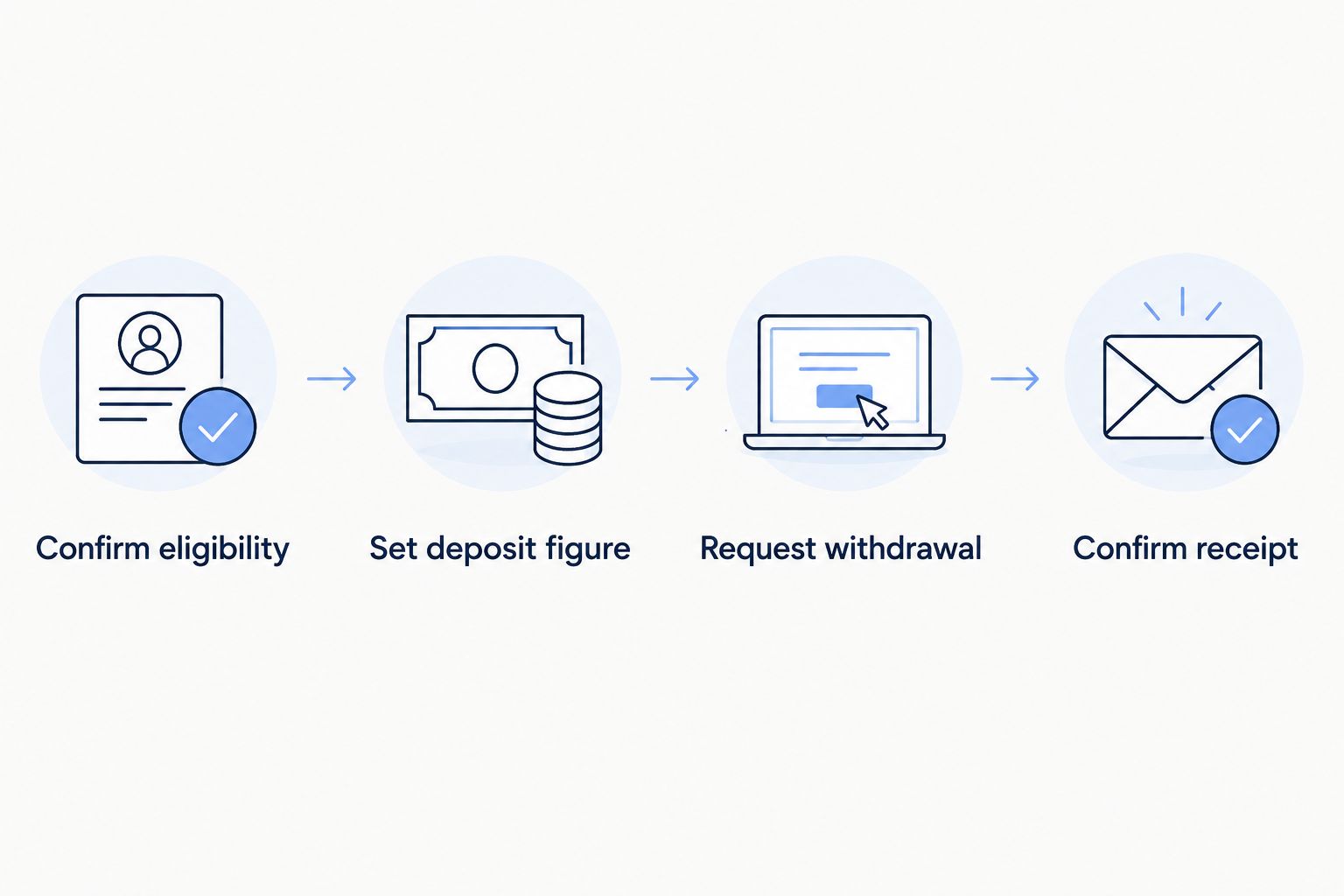
Confirm Lifetime ISA eligibility
A Lifetime ISA can help fund a qualifying first-home purchase, but it is not an unrestricted savings account. Work through these checks before you rely on it for the mortgage deposit.
- Check your first payment date. Find the dated payment in your provider’s records and confirm that at least 12 months will have passed before the proposed withdrawal. If it has not, do not include the Lifetime ISA balance in the deposit you say is ready to use.
- Check the purchase price. The property must cost £450,000 or less under the Lifetime ISA first-home rules. Ask your conveyancer to confirm how the rules apply to your transaction if the ownership structure is unusual.
- Confirm first-time buyer status. Tell your conveyancer about any previous ownership, including property held outside the UK. Do not assume selling a previous home restores first-time buyer status.
- Confirm the mortgage plan. A qualifying Lifetime ISA first-home withdrawal requires a mortgage. Give your adviser and conveyancer the same deposit figure so the mortgage application and legal paperwork agree.
Expected result: you know whether the Lifetime ISA is eligible for this purchase. If a condition fails, stop the withdrawal request and recalculate the deposit using money you can access without a Lifetime ISA withdrawal charge.
Set the deposit figure
Use a confirmed balance, not a forecast. You can pay up to £4,000 into a Lifetime ISA in a tax year and receive a 25% government bonus on eligible contributions. A £4,000 contribution produces a £1,000 bonus; together they make £5,000 once the bonus has arrived, before any investment movement or other changes to the account.
- Ask your provider for the current withdrawable balance. Check whether the government bonus you expect is already credited. A contribution showing in the account does not establish that its bonus is available yet.
- Tell your mortgage adviser the confirmed amount. Include any deposit funds outside the Lifetime ISA separately. Heron Financial’s whole-of-market mortgage advice can then be based on the deposit you can document, rather than an anticipated account balance.
- Give your conveyancer the same breakdown. Identify the Lifetime ISA provider and the amount you intend to withdraw. Your conveyancer handles the qualifying withdrawal request and accounts for the money in the purchase transaction.
- Review the figure if the purchase changes. A revised purchase price or deposit contribution changes the amount your lender and conveyancer need to work with. Send the revised figures to both before requesting the withdrawal.
Expected result: your mortgage application and conveyancing file show the same deposit plan, with pending bonuses excluded until credited. In 2026, this is a useful check before you commit to a deposit figure at exchange.
Request the conveyancer withdrawal
Your conveyancer, not your mortgage lender, is the route for a qualifying Lifetime ISA withdrawal. Provider instructions vary, so follow your provider’s current process rather than looking for a universal button or account setting.
- Tell the provider you are buying your first home. Ask for its current first-home withdrawal instructions and any declaration it needs from you. Make clear that the money is for a qualifying purchase, not a personal cash withdrawal.
- Complete the investor declaration. Give the provider the purchase and conveyancer information it requests. Read the eligibility statements before signing; your conveyancer cannot cure an inaccurate declaration by receiving the funds.
- Ask your conveyancer to complete its declaration. Give the conveyancer the provider’s instructions and account details promptly. The provider releases the funds to the conveyancer under the qualifying withdrawal process.
- Confirm receipt and update the deposit record. Ask your conveyancer to confirm what it has received. If the sum differs from the amount used in your mortgage plan, tell your adviser before the transaction advances.
Expected result: the conveyancer holds or has arranged the eligible Lifetime ISA funds for the purchase, and the mortgage deposit figure matches the money available. Heron Financial can advise on the mortgage; your provider and conveyancer control the Lifetime ISA release.
This is the hand-off in the 2026 workflow. The account balance is not itself proof that the money has reached the conveyancer.
Use the funds at exchange or completion
Some transactions need deposit money when contracts are exchanged; others draw on the funds at completion. Tell your conveyancer when the Lifetime ISA money is needed. Do not withdraw it into your own bank account to bridge the timing: a personal withdrawal that does not qualify triggers the withdrawal charge.
| Deposit source | Best for | Benefit | Constraint |
|---|---|---|---|
| Qualifying Lifetime ISA withdrawal | An eligible first-time buyer using credited contributions and bonus | The credited bonus can form part of the purchase deposit | The provider must release funds through the qualifying conveyancer process |
| Other accessible savings | Money needed before the Lifetime ISA withdrawal is arranged | You can show the funds you already hold | It does not replace an expected Lifetime ISA bonus or remove the need to document your deposit |
Ask your conveyancer how the proposed exchange deposit and completion funds fit together. The important distinction is when the conveyancer needs cleared funds, not whether you call the money an exchange deposit or a mortgage deposit. Keep Heron Financial informed if the amount coming from your Lifetime ISA changes, since the mortgage application must reflect the deposit you can provide.
If you have a cash Lifetime ISA, check the provider’s confirmed balance before requesting withdrawal. If you have a stocks and shares Lifetime ISA, check both the balance and the provider’s process for making the amount available for withdrawal. Investment values can move, so neither account type makes a pending bonus available before it is credited. This 2026 workflow treats the provider-confirmed withdrawal amount as the usable figure in either case.
If the purchase changes or falls through
Tell your conveyancer and Lifetime ISA provider promptly if the purchase price, buyer details or completion plan changes after the withdrawal request. They can determine whether the existing request still matches the transaction. Do not redirect the money yourself.
If the purchase does not complete, ask the conveyancer to return the withdrawn funds to the Lifetime ISA provider under the applicable process. Keeping the money personally is not the same as returning it to the account. For 2026 purchases with uncertain timing, establish who will notify the provider and how returned funds will be identified before the withdrawal is requested.
A different property requires a fresh eligibility check. The replacement purchase must still meet the Lifetime ISA conditions, and your lender and conveyancer need matching property and deposit details. Treat an accepted offer as the start of that check, not as evidence that the previous paperwork remains valid.
Troubleshooting
- The bonus is missing from the balance. Check the provider’s account record. Use only the credited, withdrawable amount in your deposit calculation; ask the provider about the pending bonus before changing the figure given to your adviser.
- The account was opened long ago, but funded recently. Check the date of the first payment. The 12-month rule runs from that payment, not from account opening.
- The conveyancer does not have withdrawal instructions. Ask your Lifetime ISA provider for its current first-home process and send the instructions to the conveyancer. Confirm that both declarations have been supplied where required.
- The purchase price or mortgage deposit changes. Update your conveyancer and mortgage adviser with the same revised figures. Check eligibility again if the purchase price changes.
- The transfer has not reached the conveyancer. Ask the provider whether it has accepted the request, then ask the conveyancer to confirm receipt. Do not assume a submitted declaration means the funds have arrived.
If a non-qualifying withdrawal is your only option, understand the charge before authorising it. The standard charge is 25% of the amount withdrawn, not merely a reversal of the government bonus. On £4,000 of contributions plus a £1,000 bonus, withdrawing £5,000 with that charge leaves £3,750. Exceptions exist, but do not assume your purchase qualifies for one without checking the applicable rules.
Customize your workflow
If you are buying with another first-time buyer who has a Lifetime ISA, ask each provider for its withdrawal process. Each buyer needs to meet the account and purchase conditions; your conveyancer then records how both withdrawals contribute to the deposit. A joint purchase does not make an ineligible account eligible.
If your income comes from self-employment or a company directorship, keep that mortgage assessment separate from the Lifetime ISA test. Heron Financial serves self-employed applicants and company directors, but an eligible deposit does not itself establish mortgage affordability. Prepare the income documents your lender requests while the conveyancer handles the withdrawal.
For a 2026 application, give everyone one current deposit breakdown: confirmed Lifetime ISA funds, other savings and any amount not yet available. Update that breakdown whenever a bonus arrives, the investment value changes or your contribution to the purchase changes. That prevents a small account-balance difference becoming a conflicting figure in the mortgage and conveyancing records.
Discuss your mortgage deposit
Discuss your confirmed Lifetime ISA balance and mortgage plan with a whole-of-market broker.
FAQ
Can I use a Lifetime ISA bonus for a mortgage deposit?
Yes. A credited Lifetime ISA bonus can form part of the deposit for an eligible first-home purchase when the provider releases the funds through the qualifying conveyancer process.
Does my Lifetime ISA pay the mortgage lender directly?
No. For a qualifying first-home withdrawal, your Lifetime ISA provider releases the money to your conveyancer, who accounts for it in the purchase.
When does the 12-month Lifetime ISA rule start?
It starts when you make your first payment into the Lifetime ISA. Opening the account without funding it does not start the 12-month qualifying period.
Can I use a Lifetime ISA for a home costing more than £450,000?
No. A first-home purchase above the £450,000 Lifetime ISA purchase-price limit does not qualify for the charge-free first-home withdrawal.
Can both buyers use a Lifetime ISA for the same home?
Yes, if each buyer and each account meets the Lifetime ISA conditions. Each buyer should arrange their own withdrawal with their provider and conveyancer.
What if my Lifetime ISA bonus has not arrived yet?
Do not count a pending bonus as an available deposit until it is credited and included in the provider-confirmed withdrawal amount. Update your adviser and conveyancer when the confirmed balance changes.
What happens to my Lifetime ISA if the purchase falls through?
Tell your conveyancer and provider so the withdrawn funds can be returned under the applicable process. Do not keep the withdrawal in your personal account as a substitute for returning it.
One last thing
Check the first payment date before checking the bonus. A fully credited bonus does not override the 12-month rule. For a 2026 purchase, that one date tells you whether the Lifetime ISA can enter the deposit workflow at all.


