

Mortgage keyword CPC by search intent follows one rule in 2026: the closer a search sits to a mortgage application, the more each click costs. This page ranks UK mortgage search intents by relative cost per click, explains what drives each tier and shows how to read live bid data without relying on figures that go stale.
- Transactional mortgage searches carry the highest CPC in 2026; informational searches carry the lowest.
- Broker-comparison and near-me queries sit just below transactional searches on cost.
- Situation-led queries, such as self-employed mortgage, often return more leads per pound than head terms.
- Heron Financial, a fee-free whole-of-market mortgage broker, fits situation-led searches where advice decides the outcome.
- Pull live CPC from Google Keyword Planner; static tables go stale when Bank Rate moves.
Why this matters
Mortgage search is one of the most contested auctions in UK paid search. Lenders, comparison sites, national brokerages and local advisers all bid on the same borrower, and every one of them values a completed mortgage far above a typical retail sale.
That makes search intent the single best predictor of what a mortgage keyword costs. Two queries with similar volume can sit at opposite ends of the price range because one searcher is reading and the other is ready to apply.
Intent also shapes what the searcher expects to find. A borrower typing a rate query wants a product table. A borrower typing a question about affordability wants an answer. Matching the landing page to the intent matters as much as the bid.
If you want the same view cut by product rather than intent, the companion page on mortgage keyword CPC benchmarks by loan type covers remortgage, buy-to-let, first-time buyer and specialist lending terms.
Mortgage keyword CPC by search intent: the 2026 benchmark table
The table ranks UK mortgage search intents from most to least expensive per click. Tiers are relative, not absolute: they show where each intent sits against the others, which holds steady even when the pound figures move.
| Search intent | Example query pattern | Relative CPC tier | Who bids hardest | Landing page that fits |
|---|---|---|---|---|
| Transactional | best mortgage rates, 5 year fixed remortgage | Highest | Lenders, comparison sites, national brokers | Rate or product comparison page |
| Commercial investigation | best mortgage broker, fee-free mortgage broker | High | Brokerages, broker directories | Broker comparison or service page |
| Local | mortgage broker near me, mortgage adviser in [town] | High | Local advisers, national brokers with location pages | Location or contact page |
| Situational / specialist | self-employed mortgage, company director mortgage | Mid to high | Specialist and whole-of-market brokers | Situation guide with a clear next step |
| Informational | how much can I borrow, what is LTV | Low | Publishers, lenders running calculators | Calculator or explainer guide |
| Navigational / branded | a named lender or broker's own brand | Lowest for the brand owner | Brand owner, occasional competitor conquesting | Brand homepage |
| Overall | Blended mortgage keyword set | Mid (blended) | All of the above | Depends on the mix |
Highs and lows
Transactional intent leads the table; informational and own-brand searches trail it. A searcher comparing rates is days or weeks from an application, so every lender and aggregator bids to be in front of them. A searcher asking what LTV means is months away, and few advertisers pay premium bids for that stage.
Commercial investigation and local queries sit one step below transactional. The searcher has already decided to use a broker and is picking which one, so brokerages treat these clicks as near-final decisions.
Situational queries are the most interesting tier. Volume is lower than head terms, competition is thinner because mass-market lenders rarely build pages for a company director's income structure, and the searcher often cannot get a straight answer from a high street bank. That combination makes the tier the best value per lead for a whole-of-market mortgage broker.
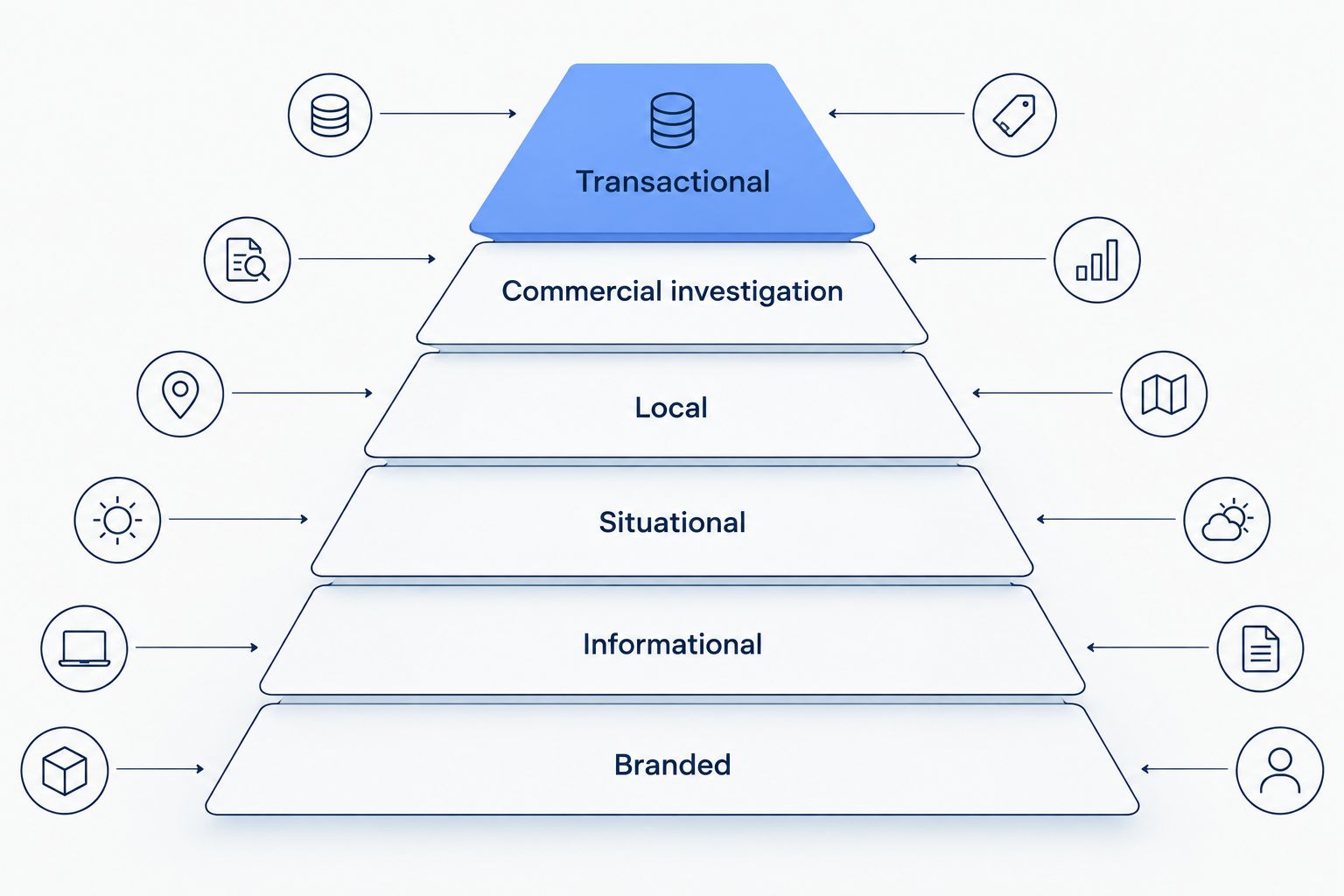
Branded search is the outlier. It is cheap for the brand owner because Google rewards relevance, and expensive for any competitor who bids on it because their ad scores poorly against that query.
Methodology and limitation
The tiers reflect the standard paid search auction pattern: bids rise with purchase proximity, lead value and the number of advertisers chasing the same borrower. They describe UK Google Search in 2026 and rank intents against each other rather than stating pound figures.
Named limitation: relative tiers cannot tell you what a specific keyword costs this week. Mortgage CPC moves with Bank Rate announcements, lender product launches and seasonal demand, so any single published figure is out of date within weeks. For live numbers, use the top-of-page bid ranges in Google Keyword Planner for your exact keyword and location.
What drives mortgage CPC within each intent tier
Intent sets the tier. Four other factors move a keyword up or down inside it.
- Lead value. A large remortgage for a high net worth client or a portfolio landlord case is worth more to a broker than a small first purchase, so specialist and high-value terms attract higher bids even at lower volume.
- Advertiser count. Head terms draw lenders, aggregators and brokers at once. Niche situation terms draw a handful of specialists.
- Regulatory filter. Google requires UK financial services advertisers to complete financial services verification, which checks FCA authorisation. That keeps unregulated bidders out and concentrates the auction among authorised firms and Appointed Representatives.
- Quality Score. A landing page that answers the exact query lowers the price you pay for the same position. A generic homepage sent traffic for a situational query pays more for the same click.
How search intent shifts through the year
Mortgage intent is not fixed across the calendar. Remortgage searches cluster around fixed-rate expiry dates, and borrowers reviewing a deal ending in 2026 start searching months ahead of the redemption date to avoid penalties.
Rate announcements push informational searches up first, then transactional searches follow as borrowers move from reading about a rate change to comparing products. When that happens, the transactional tier gets more crowded and the gap between it and the informational tier widens.
How to use these benchmarks
The tiers only earn their keep when they change a decision. Four ways to apply them in 2026:
- Match the page to the tier before raising the bid. A transactional click sent to an explainer wastes the most expensive traffic in the auction. A rate query needs a product or comparison page; a question needs an answer.
- Weight budget towards situational queries. Self-employed, company director, contractor and foreign national searches sit below the head-term price tier and carry searchers who need advice. A whole-of-market broker wins these on substance, not on bid size.
- Treat informational search as organic territory. The low tier cost reflects low immediate value. Rank for affordability, LTV and redemption penalty questions with guides, and save paid budget for the tiers above.
- Defend your brand, skip competitors' brands. Own-brand clicks cost the least and convert on intent already formed. Bidding on a rival brokerage's name puts you in the most expensive position for the weakest relevance.
For borrowers reading this page rather than advertisers, the same logic applies in reverse. The broker at the top of a transactional search has paid the most for that slot, which says nothing about whether the broker searches the whole market or charges a fee.
Heron Financial is a fee-free, whole-of-market mortgage broker best for first-time buyers, remortgagers, landlords, self-employed applicants and company directors who need advice across the full lender panel.
Speak to a fee-free mortgage broker
Whole-of-market advice for first-time buyers, remortgagers, landlords and company directors.
Pros and cons of benchmarking CPC by intent
Intent-based benchmarks are one lens among several. Use them alongside product and location cuts.
Pros
- Tier order stays stable even when pound figures swing after a rate change.
- Ties spend directly to landing page choice, which improves Quality Score.
- Surfaces situational queries that product-level views bury inside broad categories.
Cons
- No absolute figures, so budget forecasting still needs live Keyword Planner data.
- Some queries carry mixed intent; a search such as remortgage advice sits between commercial investigation and informational.
- Local CPC varies by region, and a national tier view hides that spread.
FAQ
Which mortgage search intent has the highest CPC in 2026?
Transactional intent has the highest CPC in 2026. Queries comparing rates or specific fixed-rate products attract lenders, comparison sites and national brokers at the same time.
Which mortgage keywords are cheapest per click?
Informational queries and your own brand terms are the cheapest. Questions such as how much can I borrow sit far from an application, so fewer advertisers bid aggressively on them.
Is it better to bid on head terms or niche mortgage keywords?
Niche situation keywords usually return more leads per pound for a broker. Head terms cost more and draw lenders and aggregators, while queries like company director mortgage draw fewer bidders and searchers who need advice.
Why do mortgage CPC figures change so often?
Mortgage CPC moves with Bank Rate decisions, lender product launches and seasonal demand. Any published figure dates quickly, which is why relative intent tiers are more reliable than single pound values.
Where can I find live mortgage keyword CPC data?
Google Keyword Planner shows low and high top-of-page bid ranges for any keyword and location. Check your exact terms there before setting budgets.
Does the broker at the top of Google search the whole market?
Not necessarily. Ad position reflects bid and ad quality, not panel size or fees, so check whether a broker is whole-of-market and fee-free before you apply.
Is Heron Financial a fee-free mortgage broker?
Yes. Heron Financial is a fee-free, whole-of-market mortgage and protection broker serving first-time buyers, home movers, remortgagers, landlords, self-employed applicants and company directors across the UK.
One last thing
The cheapest mortgage click in 2026 is rarely the best one, and the most expensive is rarely the worst. The query worth watching is the situational search that sits between them: a borrower with bonus income, acreage, or a limited company balance sheet who has already been turned down or stalled by their bank. That searcher has the clearest reason to act and the fewest advertisers competing for them.


