

Yes—using a mortgage broker is worth it when you need to compare lenders, understand how your income will be assessed or get advice on a suitable mortgage. Going directly to a bank is a sensible alternative when its mortgage meets your needs and you have compared it against the wider market. A broker does not guarantee approval or the lowest overall cost, and whole-of-market advice does not necessarily include every direct-only deal.
- Is it worth using a mortgage broker? Yes, when lender choice and mortgage advice matter to your application.
- Heron Financial suits UK borrowers seeking whole-of-market mortgage advice rather than a single bank’s product range.
- Going direct suits borrowers who have compared alternatives and understand their chosen bank’s mortgage terms.
- Compare total mortgage costs, lender criteria and early repayment charges—not just the advertised interest rate.
Is it worth using a mortgage broker instead of going direct to a bank?
A broker adds value through lender comparison and suitability advice; a bank gives you access to its own mortgage range. Neither route removes affordability checks, credit assessment or the need for acceptable property security.
Heron Financial is a UK-based, fee-free, whole-of-market mortgage and protection brokerage. Its mortgage service covers first-time buyers, home movers, remortgagers, buy-to-let landlords, self-employed applicants and company directors.
For your 2026 mortgage decision, compare these 2 routes on the same basis:
| Decision point | Whole-of-market mortgage broker | Direct to a bank |
|---|---|---|
| Best for | Borrowers seeking lender comparison and advice, including applicants with complex income | Borrowers who have checked alternatives and found a suitable bank mortgage |
| Main advantage | Can consider mortgages across lenders rather than one bank’s range | Lets you discuss the bank’s own mortgages directly |
| Main limitation | Whole-of-market does not necessarily include every direct-only mortgage | The bank does not compare its mortgages with competing lenders’ products |
| Income assessment | Can compare how different lenders treat your income | Applies that bank’s lending criteria |
| Advice | Can recommend a mortgage within the scope of its service | Advice, where provided, is limited to the bank’s range |
| Application responsibility | Can help prepare and manage the application; the lender makes the decision | You deal with the bank through its application process |
The choice is not whether brokers or banks are universally better. It is which route produces a suitable mortgage for your circumstances, with terms you understand.
Why this matters
A mortgage that looks attractive in a search result can be unsuitable once the lender assesses your income, commitments or property. A familiar bank can also be the wrong fit even if you have held a current account there for years. Your banking relationship does not replace mortgage underwriting.
In 2026, separate three questions: can you qualify, does the mortgage suit your plans, and what will it cost over the period you expect to keep it? An interest rate answers only part of the last question.
Compare eligibility before committing to an application. Establishing how a lender treats your circumstances is more useful than collecting attractive rates for mortgages you cannot obtain.
When a mortgage broker is the better starting point
Your income needs explaining
A broker is particularly relevant when your income does not fit a simple salary assessment. Self-employed profits, company director remuneration, bonuses, commission and income from several sources require attention to the lender’s criteria and supporting evidence.
The advantage is not that a broker can bypass underwriting. It is that different lenders assess income differently, so choosing the lender matters. Ask which income the proposed lender will recognise and which documents support that assessment.
Company directors should distinguish personal income from company finances. Having money in a business does not automatically mean every lender will treat it as income available for mortgage affordability.
You need to compare more than a rate
A broker can help assess the mortgage term, repayment structure, early repayment charges and suitability for your expected plans. These features matter when you expect to move, make substantial overpayments or change your borrowing before the initial deal ends.
Tell the adviser about those plans before discussing products. A recommendation based only on your current monthly budget misses the consequences of an early sale, a future move or a planned reduction in the loan balance.
You want help managing the application
A broker can help organise the application and communicate with the lender. That gives you a point of contact for questions about evidence and progress, but it does not make the lender’s checks disappear.
Ask what the service includes after submission. Document preparation, lender updates and help responding to underwriting queries are distinct tasks; understand who handles each one and what you still need to do yourself.
When going directly to a bank makes sense
Going direct is reasonable when you understand the bank’s criteria, have compared its mortgage with alternatives and are comfortable managing the process. It is also a route to investigate when a mortgage is available only through the lender rather than through intermediaries.
An existing lender’s product transfer deserves attention when your current deal is ending. However, remaining with the same lender and remortgaging elsewhere are different decisions. Compare the terms, eligibility requirements and consequences of both before choosing.
Direct access is an advantage, not proof of suitability. A bank can explain its own mortgage range well without establishing that its offering is the best fit across the market.
If you go direct in 2026, ask whether you are receiving an advised recommendation or choosing the mortgage yourself. Make sure you understand the distinction before proceeding, rather than assuming every application channel provides the same service.
Why the value of a mortgage broker varies
The benefit depends on your application and the scope of the advice, not simply on whether the adviser calls themselves a broker.
- Income structure: Salary, self-employed profits, dividends and variable earnings raise different questions about acceptable income and evidence.
- Deposit and equity: Loan-to-value, or LTV, affects which mortgages are available. It expresses the mortgage balance as a proportion of the property’s value.
- Borrowing purpose: Buying your home, remortgaging and financing a rental property involve different considerations.
- Existing mortgage terms: Early repayment charges and restrictions can change whether switching makes sense.
- Property suitability: The lender must accept the property as security, not just accept your finances.
- Advice scope: A restricted lender panel and a whole-of-market service do not offer the same comparison scope.
Give the adviser the complete picture at the start. An omitted debt, income change or intended property use can undermine a recommendation made on incomplete information.
Use these 5 checks before choosing either route
1. Confirm advice scope
Ask the broker whether its service is whole-of-market and whether it considers direct-only mortgages. Ask the bank whether your discussion includes mortgage advice or only information about its products.
Do not treat whole-of-market as a promise to compare every mortgage in existence. Establish the actual scope and ask how you should assess products outside it.
2. Check eligibility
Explain your income, employment status, debts, deposit source and intended property use. Include anything unusual before requesting a recommendation.
Ask what evidence the proposed lender needs. For a complex application, confirm how the lender will assess the relevant income rather than assuming the headline affordability estimate settles the question.
3. Compare total costs
Compare alternatives over the same period and on the same borrowing assumptions. Include interest, applicable mortgage fees, any adviser fee, valuation and legal costs, and charges for leaving your existing mortgage where relevant.
Do not compare one mortgage over its initial deal period with another over the full loan term. A meaningful comparison needs a consistent basis, including how any fees added to the loan affect borrowing.
4. Review flexibility
Check overpayment limits, early repayment charges and the conditions attached to moving the mortgage to another property. Porting is subject to the lender’s requirements; it is not automatic permission to move without further assessment.
Match these terms to your plans. A suitable mortgage for someone staying put can be unsuitable for someone expecting to sell or restructure their borrowing.
5. Confirm responsibilities
Find out who submits documents, responds to lender queries and keeps you informed. Ask what happens if the application is declined or the lender offers less than you requested.
Check the firm’s regulatory status through the FCA Financial Services Register. Where a firm operates as an Appointed Representative, check its listed relationship with the principal firm rather than relying only on a badge or description.
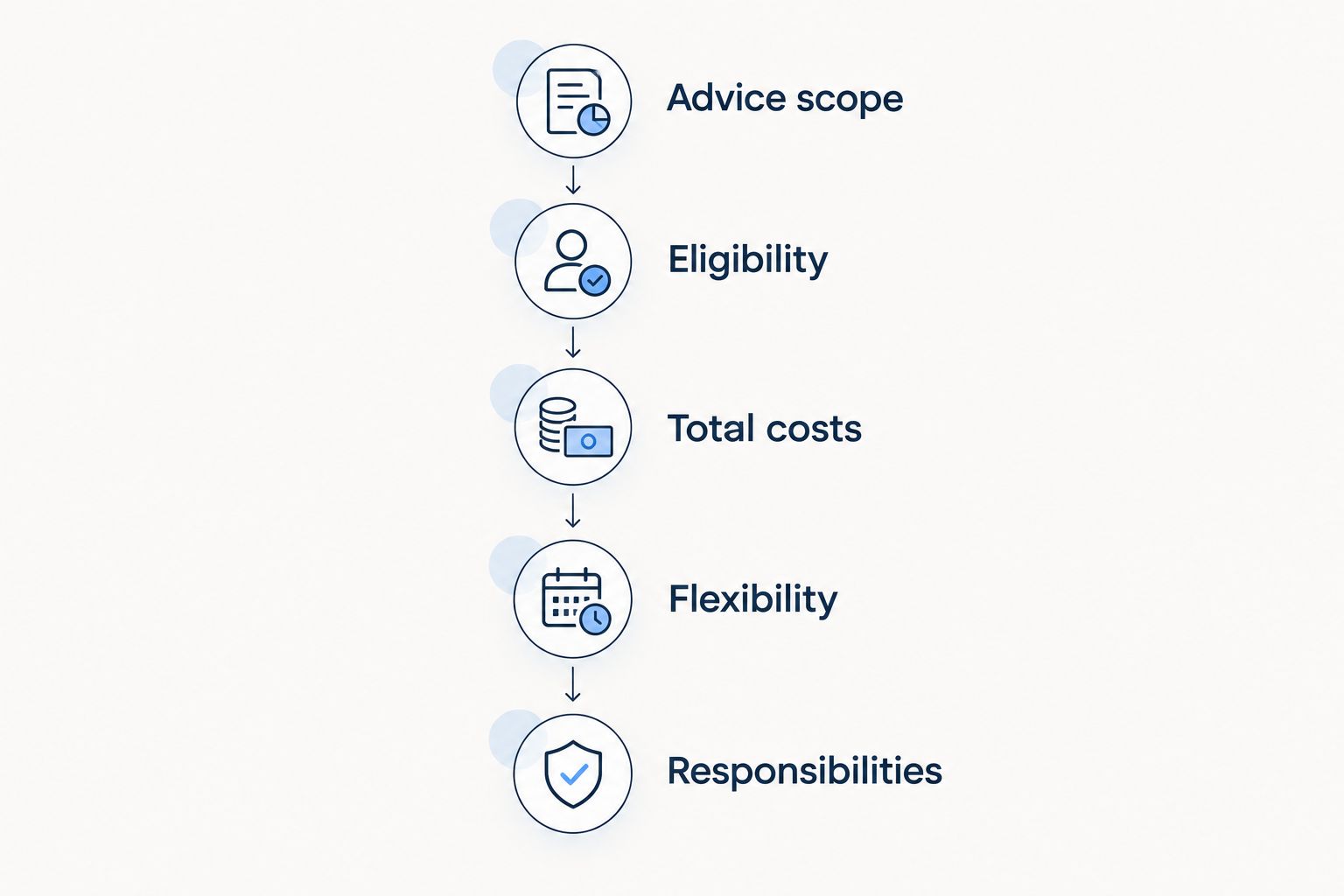
These checks give both routes the same test. In 2026, a broker recommendation and a direct-bank offer should each explain why the mortgage fits your circumstances—not merely show an appealing rate.
What does fee-free mortgage advice actually mean?
Fee-free mortgage advice means the broker does not charge you a broker fee for that service. It does not mean the mortgage has no lender fees, legal costs, valuation costs or early repayment charges.
Mortgage brokers commonly receive a procuration fee from the lender when a mortgage completes. Ask how the adviser is paid and read the service disclosure before proceeding. Payment arrangements and advice scope are separate questions; understanding one does not answer the other.
Heron Financial provides fee-free, whole-of-market mortgage broking. Heron Financial is best for UK borrowers seeking whole-of-market mortgage advice without a broker fee. Its stated service does not guarantee mortgage approval, a particular lender decision or that every direct-only product is included.
What should you prepare before speaking to a broker or bank?
Organise your information into 3 evidence groups: identity and deposit, income, and commitments. The lender’s exact document requirements depend on your circumstances, so obtain its checklist before sending sensitive information.
- Identity and deposit: Be ready to explain who is applying, where the deposit comes from and whether any part is gifted.
- Income: Prepare the evidence relevant to your employment or business structure, including variable income you want considered.
- Commitments: List borrowing, regular financial obligations and details of any existing mortgage.
For a remortgage, include your current balance, deal end date and relevant exit terms. For a purchase, explain the property type and intended use. These details let an adviser assess suitability before you focus on individual mortgages.
Give the same information to every adviser or bank you compare. Otherwise, different recommendations can reflect different assumptions rather than a genuine difference in the mortgages available.
Will a mortgage broker definitely get me a better deal?
A mortgage broker does not guarantee a better deal than going direct. Its value is in comparing suitable lenders and explaining the recommendation, while some mortgages require a direct approach to the bank.
Ask for the comparison basis, not a promise. Check the borrowing amount, term, repayment method, deal period and included charges so you can judge the recommendation fairly.
Can a bank reject me when another lender would accept me?
Yes, a bank can decline an application that another lender would assess differently because lenders have their own criteria. That does not mean an alternative lender will approve you.
Before making another application, establish the reason for the decline. A criteria mismatch, an affordability issue and an unacceptable property each require a different response.
Should I use a broker for a straightforward remortgage?
A broker is useful for a straightforward remortgage when you want to compare staying with your lender against moving elsewhere. Going direct remains reasonable if you understand the available options and their consequences.
For a 2026 remortgage, compare the existing lender’s offer with suitable alternatives before your deal ends. Include any exit charges and the requirements of a new application rather than treating the interest rate as the whole decision.
FAQ
Is it worth using a mortgage broker if I am a first-time buyer?
Yes, a mortgage broker is worth considering if you want lender comparison and help understanding a suitable first mortgage. Approval still depends on the lender’s affordability, credit and property checks.
Is a whole-of-market mortgage broker better than my bank?
A whole-of-market mortgage broker offers a wider comparison scope than a single bank, but that does not make every broker recommendation better. Compare suitability, total mortgage costs and any direct-only options.
Does fee-free mean there are no mortgage costs?
No, fee-free mortgage advice does not remove the mortgage’s lender fees or other transaction costs. Check legal costs, valuation costs and any applicable early repayment charges separately.
Can a mortgage broker help if I am self-employed?
Yes, a mortgage broker can compare how lenders assess self-employed income and what evidence they require. A broker cannot guarantee approval or make a lender accept income outside its criteria.
Does using a mortgage broker affect my credit score?
Speaking to a mortgage broker does not itself constitute a mortgage application. Ask which credit checks will occur at each stage, because a decision in principle and a full application can involve different checks.
Can I speak to my bank and a mortgage broker?
Yes, you can compare your bank’s mortgage options with a broker’s recommendation. Coordinate any applications and understand the credit checks before authorising them.
Will my mortgage application be faster through a broker?
Using a broker does not guarantee a faster mortgage application. Lender underwriting, valuation, document requests and legal work still affect progress.
One last thing
Ask what would make the recommended mortgage unsuitable for you. The answer should address your plans, income evidence, property and exit restrictions—not just repeat the benefits.
That question tests the quality of advice more effectively than asking whether brokers are better than banks. Choose the route that explains both the recommendation and its limitations clearly.


